

Sciatica pain can stop you in your tracks. That sharp, burning sensation shooting from your lower back through your hip and down your leg makes it difficult to sit, stand, sleep, or get through a normal day. If that sounds familiar, you don’t have to push through it.
At Freeform Health in Bathurst, our osteopaths and remedial massage therapists work with patients with sciatica every week, helping them get out of pain and back to the things that matter. To help you make sense of this condition, let’s go through the main sciatica pain causes, what the symptoms look like, and practical advice on how to relieve sciatica pain at home and with professional treatment.
What Is Sciatica?
Sciatica is nerve pain caused by irritation or compression of the sciatic nerve, the longest nerve in your body. It runs from the lower back through the hips and buttocks and down each leg, branching out at the knee into smaller nerves that extend to your feet.
When something presses on or irritates the sciatic nerve, the result is pain that can range from a dull ache to a sharp, burning sensation. Some people experience tingling or numbness. Others feel a jolt of pain that makes it impossible to sit comfortably. It almost always affects one side of the body, and the intensity can vary from mildly annoying to completely debilitating.
What Causes Sciatica Pain?
Sciatica is a symptom, not a diagnosis. Something is compressing or irritating the nerve, and identifying the cause is the first step toward the right treatment. These are the most common sciatica pain causes:
- Herniated or Bulging Disc: This is the most common cause. When the soft centre of a spinal disc pushes through a crack in its outer casing, it can press directly on the sciatic nerve root.
- Spinal Stenosis: A narrowing of the spinal canal, usually due to age-related changes, that puts pressure on the nerves running through it. More common in people over 50.
- Piriformis Syndrome: The piriformis is a small muscle deep in the buttock. When it tightens or spasms, it can compress the sciatic nerve where it passes underneath (or in some people, through) the muscle.
- Degenerative Disc Disease: As discs age, they lose height and hydration, narrowing the space around the nerve roots and leading to irritation.
- Pregnancy: As the uterus grows, it can place pressure on the sciatic nerve, particularly in the second and third trimesters. Our pregnancy massage service is designed to help manage this.
- Prolonged Sitting and Poor Posture: Spending long hours seated, especially with poor spinal alignment, can compress the lower back and aggravate the sciatic nerve over time.
Our osteopaths diagnose the root cause through a thorough physical assessment But in a more thorough way than you would expect. We look at your whole body. Both sides of your spine and pelvis. But why? Sciatic compression of the jelly-like disc in your spine behaves like the contents of a sandwich – compress one side and the jelly material bulges out the other side. This gives you that annoying pain, tingling and numbness in the other leg. Osteopaths are trained to figure out where this compression is really coming from. We make sure we treat the correct side!
Sciatica Symptoms: How to Know If You Have It
The defining feature of sciatica is pain that radiates from the lower back or buttock down the back of one leg. But it doesn’t always show up the same way. Common symptoms include:
- A sharp, shooting, or burning pain that travels from the lower back through the buttock and down the leg
- Numbness or tingling in the leg, foot, or toes
- Muscle weakness in the affected leg
- Pain that gets worse when sitting, coughing, or sneezing
- Difficulty standing up or walking after sitting for a long period
Sciatica typically affects one side of the body. If you’re experiencing symptoms in both legs, or you notice loss of bladder or bowel control, seek medical attention immediately as this may indicate a more serious condition.
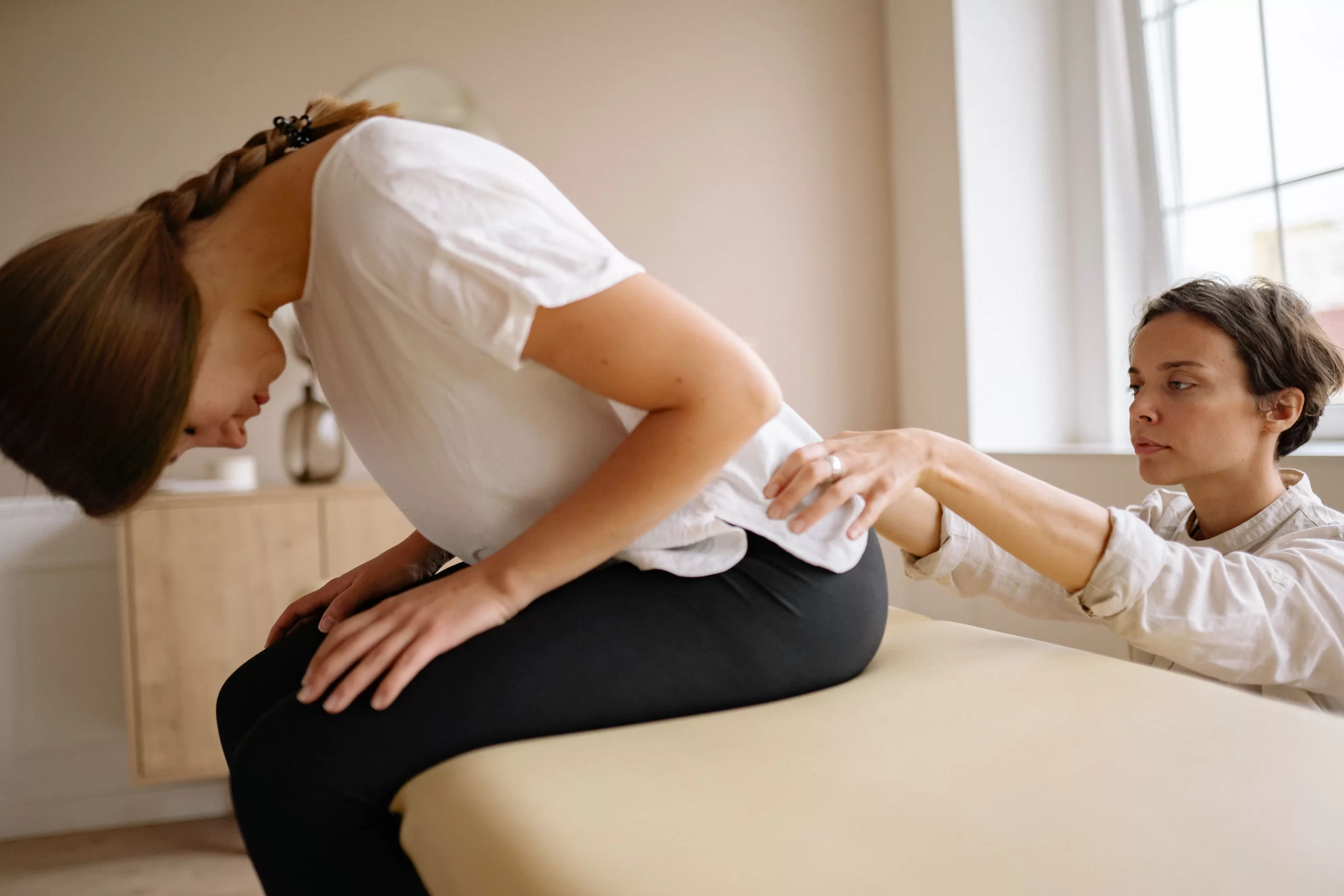
How to Relieve Sciatica Pain
The good news is that most cases of sciatica improve with the right combination of self-care and professional treatment. Here’s how to relieve sciatica pain effectively, starting with what you can do at home.
Osteopathic assessment and diagnosis
Proper care at home begins with a thorough assessment of your physical health and discussion about why your pain started. This means we may even come out to look at your driving position and seat set-up in your car. This way we ensure everything you do during the day supports your treatment and health journey.
At-Home Relief
In the first 48 to 72 hours, cold-hot-cold application (called ‘contrast bathing’) is an excellent way to reduce inflammation and pain. Apply a cold back to your lower spine for 3minutes. Then apply a gentle heat pack to the area for 3-minutes. Alternate five times in total, starting and finishing with cold. The cold reduces inflammation of your sciatic nerve, with the heat gently supplying blood flow to spasming lower back muscles.
Natural anti-inflammatories for pain relief are provided at Freeform Health , just ask reception or check in with our Nutritionist and Naturopath – Miriam Cullen. Over the counter anti-inflammatories like Ibuprofen or Paracetamol may also help manage pain in the short term (check with your pharmacist or GP if you’re unsure).
One of the most important things you can do is keep moving gently. Prolonged bed rest tends to make sciatica worse, not better. Short, easy walks and light stretching help keep the muscles around the nerve from tightening further.
When sleeping, try lying on your back with a pillow under your knees, or on your side with a pillow between your legs to take pressure off the lower back.
Exercises and Stretches for Sciatica
Gentle stretching can make a significant difference in sciatica pain. These are four commonly recommended stretches that target the muscles most often involved:
- Knee-to-chest stretch: Lie on your back with both knees bent. Pull one knee toward your chest and hold for 20 to 30 seconds. You should feel a gentle stretch through your lower back and glute. Repeat on the other side.
- Stretch the groin AND the glutes – While a piriformis stretch is often recommended, this can further irritate the sciatic nerve and prolong painful symptoms if a stretched piriformis is causing sciatica. Lay for a few minutes on your back with your knees apart. Opening the hips increases hip mobility, taking pressure off the muscles and nerves in the area.Follow with a very brief piriformis stretch by lifting one bent knee and hugging it towards your opposite shoulder.
- Seated spinal twist: Sit on the floor with your legs out straight.. Take one bent leg and lay it over your opposite side, creating a lower back twist. by using your opposite elbow for leverage. Hold for 20 to 30 seconds.
- Cat-cow stretch: On all fours, alternate between arching your back (cow) and rounding your spine (cat) in slow, controlled movements. This mobilises the spine and relieves compression on the nerve. Repeat 10 to 15 times.
If any stretch increases your pain, stop and consult our team before continuing.
Massage for Sciatica Relief
Remedial massage is one of the most effective hands-on treatments for sciatica, particularly when piriformis syndrome or muscular tension is contributing to the problem. Once your Osteopath has assessed where the sciatic pain is originating from, they will inform our qualified massage therapists to can release tightness in the affected piriformis, glutes, and surrounding muscles to release nerve compression, improve blood flow,and reduce inflammation.
At Freeform Health, our team of remedial massage therapists regularly treat patients with sciatica working with your Osteopath to ensure your treatment plan addresses both the muscular and structural components of the problem.
Sciatica Treatment Options
The right treatment depends on what’s causing your sciatica, how severe it is, and how long you’ve been dealing with it. Here are the main pathways:
- Osteopathy: Manual therapy including spinal mobilisation, soft tissue work, and joint manipulation to reduce nerve irritation and improve function. Osteopathy is a hands-on, non-invasive first line of treatment that targets the root cause rather than masking the pain.
- Remedial Massage: Focused soft tissue treatment to release muscle tension contributing to nerve compression, particularly effective for piriformis-related sciatica.
- Exercise Rehabilitation: Targeted strengthening and flexibility exercises prescribed by your practitioner to prevent recurrence and support long-term recovery.
- Kinetic Stretching: Book in to see our Massage Therapist Jade who can incorporate Kinetic Stretching into your treatment.
- Inversion table: Freeform Health supports inversion table use for sciatic relief if safe and indicated. These at-home or in-clinic tables gently tip you almost upside down to around 45 degrees, and further if you feel comfortable. Inversion provides gentle traction and often immediate relief. If you find this helpful our team will order you the right inversion table for home relief whenever you need it.
- Medical Options: If conservative treatment doesn’t resolve the issue, our Osteopaths can refer you directly for medical imaging (xray, MRI or CT scan). If indicated, your GP may also prescribe a corticosteroid injection to support your treatment with our team. Surgery is generally considered a last resort when there is significant neurological compromise. Our team is passionate about supporting your recovery so that surgery is not required.
Our osteopaths at Freeform Health will thoroughly assess your condition and let you know whether hands-on treatment is appropriate or whether you need to be referred on for further investigation.
When to See a Professional About Sciatica
Most sciatica settles within 4 to 6 weeks with the right care, but there are situations where you should seek professional help sooner rather than later:
- Your pain persists beyond 4 to 6 weeks or is getting worse
- You experience sudden loss of bladder or bowel control (seek emergency medical attention)
- You notice progressive weakness in one or both legs
- Your symptoms are bilateral (affecting both sides)
- The pain is severe enough to affect your daily activities, work, or sleep
Even if your symptoms are mild, early assessment and treatment can speed up recovery and reduce the risk of the problem becoming chronic.
Sciatica Treatment in Bathurst
Freeform Health’s osteopaths and remedial massage therapists treat sciatica patients in Bathurst every week. If you’re dealing with sciatic pain that’s affecting your quality of life, we can help you find the cause and start getting relief.
Phone: 02 6331 3535
Address: 232 William St, Bathurst NSW 2795
Book an appointment today.